
Vegetarian Protein Calculator (India)
Your daily protein target for staying healthy, weight loss or muscle gain — plus an Indian vegetarian meal plan to hit it.
Start the toolYour daily protein
104–130 g
That’s 1.6–2 g per kg. Aim for about 117 g — roughly 29 g across each of 4 meals.
A vegetarian Indian day for ~117 g
- Breakfast
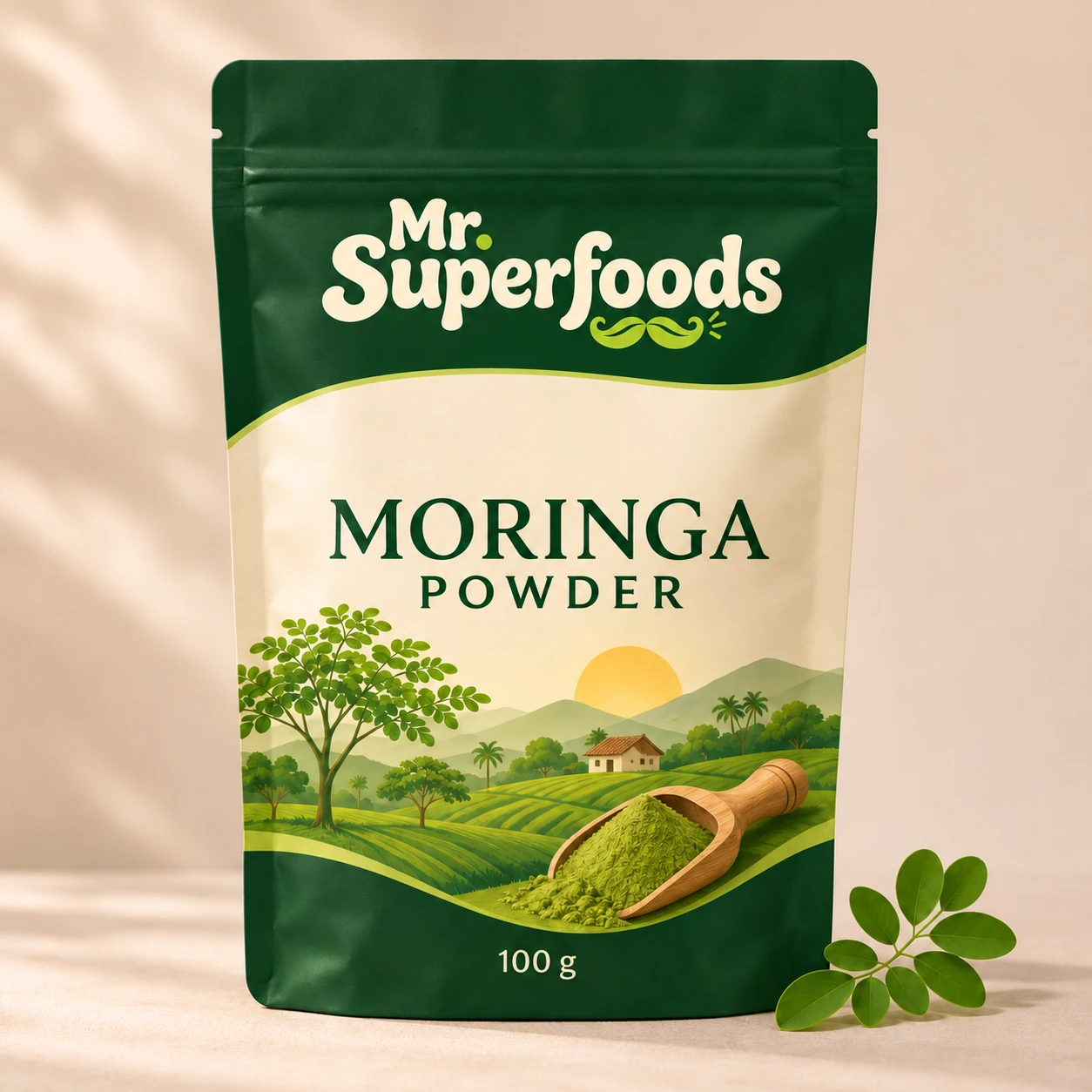
- Milk · 1 glass (250 ml) · 8 gChana sattu drink · 2 tbsp (30 g) · 6 gMr. SuperFoods Moringa Powder · 1 tsp (3 g) · 0.8 g
- Lunch
- Dal (toor / moong / masoor) · 1 katori cooked · 9 gWhole-wheat roti · 2 medium · 6 gCooked rice · 1 cup · 4 gCurd / dahi · 1 cup (200 g) · 7 gPaneer · 100 g · 18 g
- Snack
- Peanuts / chikki · 30 g · 7.5 gSoya chunks · 30 g dry · 15 g
- Dinner
- Rajma or chole · 1 cup cooked · 14 gPaneer · 100 g · 18 gWhole-wheat roti · 2 medium · 6 g
≈ 119 g protein
Moringa adds less than 1 g protein per teaspoon — it’s there for greens, not protein. The protein comes from dal, paneer, soya, curd and seeds.
Vegetarian Protein Calculator
How much protein do you need? Healthy Indian adults need about 0.83 g per kg of body weight a day (ICMR-NIN). If you exercise, 1.2–2.0 g per kg is common — higher when you’re building muscle or losing fat.
Enter your weight, goal and activity to get your number and an Indian vegetarian day of meals that reaches it.
Last reviewed 11 November 2026 · Based on ICMR-NIN guidelines
How much protein do I need?
The Indian Council of Medical Research (ICMR-NIN, 2020) sets the protein requirement for healthy adults at 0.83 g per kilogram of body weight per day. That is the minimum for most people who are not very active.
- Mostly sitting: 0.83–1.0 g/kg
- Active 3–4 days a week: 1.0–1.2 g/kg
- Training 5+ days a week: 1.2–1.6 g/kg
- Building muscle: 1.6–2.0 g/kg
Protein intake for weight loss
When you eat fewer calories, protein helps you feel full and keep muscle. A common target is 1.2–1.6 g per kg, spread across breakfast, lunch, a snack and dinner. Start the day with protein — besan chilla, sattu, curd or eggs — instead of only poha or toast.
Protein intake for muscle gain
For building muscle, most guidance lands at 1.6–2.0 g per kg a day with regular strength training and enough calories. For a 70 kg vegetarian that’s roughly 110–140 g — very doable with paneer, soya, dal, curd and a milk or sattu drink. See our vegetarian recovery guide.
Best vegetarian protein sources in India
Approximate protein per typical serving:
| Food | Serving | Protein |
|---|---|---|
| Paneer * | 100 g | 18 g |
| Soya chunks | 30 g dry | 15 g |
| Rajma or chole | 1 cup cooked | 14 g |
| Eggs * | 2 large | 12 g |
| Tofu | 100 g | 10 g |
| Dal (toor / moong / masoor) | 1 katori cooked | 9 g |
| Pumpkin seeds | 30 g | 9 g |
| Milk * | 1 glass (250 ml) | 8 g |
| Peanuts / chikki | 30 g | 7.5 g |
| Curd / dahi * | 1 cup (200 g) | 7 g |
| Chana sattu drink | 2 tbsp (30 g) | 6 g |
| Whole-wheat roti | 2 medium | 6 g |
| Palak (cooked spinach) | 1 cup | 5 g |
| Cooked rice | 1 cup | 4 g |
| Ragi roti or dosa | 1 piece | 3 g |
* Not vegan. Values are rounded estimates from IFCT 2017 and USDA data; recipes vary.
Good Questions
How much protein do I need per day?
ICMR-NIN recommends 0.83 g per kg of body weight a day for healthy Indian adults — about 50 g for a 60 kg person. If you train regularly, 1.2–2.0 g per kg is a common range.
How much protein should I eat to lose weight?
Many people aim for about 1.2–1.6 g per kg of body weight while losing fat, spread across meals, to stay full and protect muscle.
How much protein do I need to build muscle as a vegetarian?
Around 1.6–2.0 g per kg a day — about 110–140 g for a 70 kg person — from paneer, soya, dal, curd, tofu, milk and seeds.
Can vegetarians get enough protein from Indian food?
Yes. Combining dal, paneer or tofu, soya, curd, milk, sattu and nuts across 4 meals makes 80–120 g a day very achievable.
Is moringa powder a good source of protein?
Moringa leaf powder contains some protein, but a teaspoon gives under 1 g. Use it for greens and micronutrients, not as your protein source.
Sources
- ICMR-NIN — Nutrient Requirements for Indians (RDA & EAR), 2020
- ICMR-NIN — Indian Food Composition Tables (IFCT), 2017
- USDA FoodData Central
- NIH Office of Dietary Supplements — Iron fact sheet
This tool gives general nutrition information for healthy adults and is not medical advice. Values are approximate. If you are pregnant, breastfeeding, have a medical condition or take medicines, please speak to your doctor or a registered dietitian.
More free tools
- Daily Nutrient CalculatorYour daily needs for key nutrients based on ICMR-NIN guidelines for Indians, with foods that help you get there.Open tool
- Iron Intake CalculatorAdd up the iron in a typical day of Indian vegetarian food and compare it with your daily target.Open tool
- How Much Moringa Per Day? Dose CalculatorHow much of each superfood powder to take per day in teaspoons and grams, the best time, and a 7-day ritual plan.Open tool
- Which Superfood Should I Take? QuizAnswer five quick questions to find the superfood powder that fits your goal, routine and taste.Open tool