

Daily Nutrient Calculator
Your daily needs for key nutrients based on ICMR-NIN guidelines for Indians, with foods that help you get there.
Start the toolICMR-NIN 2020 Recommended Daily Allowances
For healthy Indian adults* Targets represent Recommended Dietary Allowances (RDA) sufficient for 97–98% of healthy individuals. Pregnancy and lactation reflect increased metabolic demands.
How to reach each target from everyday Indian food
Protein
For muscle, cell repair & immunity
- Dal / Rajma / Chole9–14 g per katori
- Paneer / Tofu (100g)14–18 g
- Curd / Dahi (1 cup)7 g
- Sattu / Soya Chunks6–15 g per serving
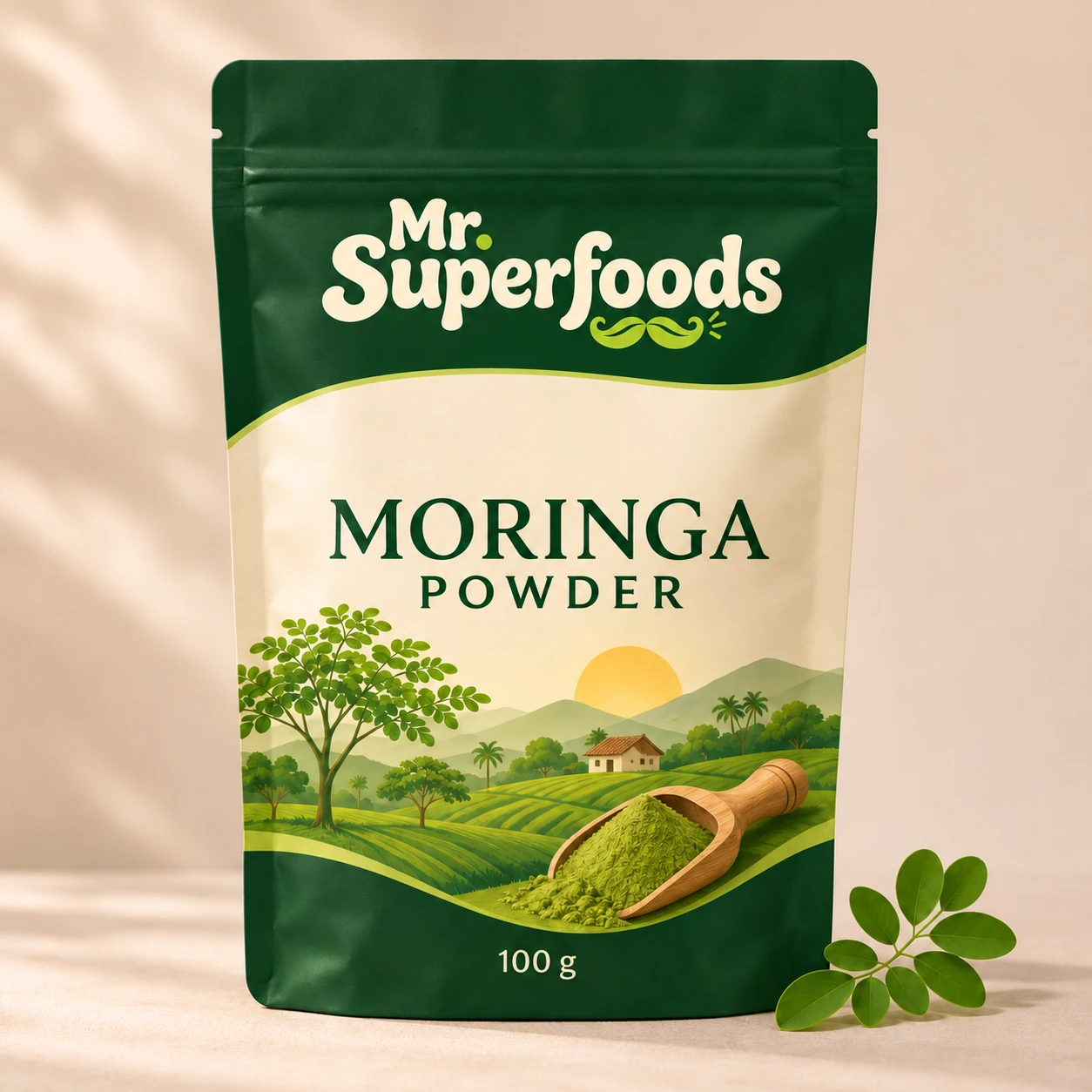
Moringa adds gentle greens & amino acids to dal or smoothies.
Explore MoringaIron
For haemoglobin, oxygen delivery & energy
- Garden Cress Seeds (Halim)~5 mg per tsp soaked
- Cooked Palak / Greens~4–6 mg per cup
- Rajma / Soya chunks~3–4.5 mg per cup
- Sesame & Pumpkin Seeds~2.5 mg per handful
Plant iron absorbs up to 3x better when paired with Vitamin C from Amla.
Explore AmlaCalcium
For strong bones, teeth & nerve signaling
- Milk / Curd / Buttermilk200–300 mg per cup
- Paneer (100g)400 mg
- Ragi (Finger Millet) Roti340 mg per 100g grain
- White Sesame (Til) 1 tbsp90 mg
Moringa leaves are naturally rich in plant calcium and bioflavonoids.
Explore MoringaVitamin C
For collagen, iron absorption & cell protection
- Fresh Amla (Indian Gooseberry)600 mg per 100g
- Guava (1 medium)200 mg
- Lemon / Orange / Sweet Lime30–50 mg
- Green Capsicum / Papaya60–80 mg
½ tsp of Amla powder in warm water gives your morning an easy Vitamin C kick.
Explore AmlaDaily Nutrient Calculator
What nutrients do Indians need every day? According to the latest ICMR-NIN guidelines, healthy adults require 0.83 g of protein per kg of body weight, 19–29 mg of iron, 1000 mg of calcium, and 65–80 mg of vitamin C every day.
Select your biological sex, life stage and activity level to see your exact targets and the best everyday Indian vegetarian food sources to reach them.
Last reviewed 11 November 2026 · Based on ICMR-NIN guidelines
Understanding the 4 Key Nutrients for Indians
The Indian Council of Medical Research (ICMR-NIN 2020) revised nutrient benchmarks to reflect modern dietary patterns. Four micronutrients and macronutrients form the foundation of everyday vitality:
- Protein: Essential for maintaining lean muscle mass, cell repair, and immune antibody production.
- Iron: Crucial for producing haemoglobin, which transports oxygen to your brain and muscles. Over 50% of Indian women experience sub-optimal iron levels.
- Calcium: Critical for bone density, cardiovascular function and muscle contraction.
- Vitamin C: An essential antioxidant that acts as a natural catalyst for absorbing plant-based (non-heme) iron.
Bridging the Micronutrient Gap with Traditional Foods
Modern processed meals often leave micronutrient voids. Traditional Indian cooking naturally paired synergistic ingredients:
For example, pairing iron-rich dal with a squeeze of fresh lemon, or drinking warm milk with a pinch of spices before bed. Incorporating concentrated whole foods — such as a teaspoon of Moringa leaf powder in smoothies or Amla powder in water — provides a simple, food-first ritual to help meet your daily numbers.
Good Questions
What are the ICMR-NIN RDA guidelines?
The Indian Council of Medical Research and National Institute of Nutrition (ICMR-NIN, 2020) defines Recommended Dietary Allowances (RDAs) specific to the Indian population, factoring in typical diets, bioavailability, body weights and climate.
Why do women need more iron than men in India?
ICMR-NIN recommends 29 mg of iron daily for adult women versus 19 mg for adult men. This accounts for monthly blood loss from menstruation and lower iron absorption rates from predominantly vegetarian diets.
How much calcium do adults need daily?
The standard adult recommendation is 1000 mg per day. This increases to 1200 mg for pregnant women, lactating mothers and seniors aged 50+ to maintain bone mineral density.
Can I get all my daily vitamin C without supplements?
Yes. Fresh Amla (Indian gooseberry) is one of the densest natural sources on earth (600 mg/100g). Just one guava or ½ tsp of pure Amla powder easily meets and exceeds the 65–80 mg adult daily requirement.
Where do superfood powders fit into daily nutrient requirements?
Single-ingredient powders like Moringa and Amla are concentrated whole-food additions. While they don't replace staples like dal and sabzi, they provide bioavailable micronutrients, plant chlorophyll and vitamin C in a simple daily spoonful.
Sources
- ICMR-NIN — Nutrient Requirements for Indians (RDA & EAR), 2020
- ICMR-NIN — Indian Food Composition Tables (IFCT), 2017
- USDA FoodData Central
- NIH Office of Dietary Supplements — Iron fact sheet
This tool gives general nutrition information for healthy adults and is not medical advice. Values are approximate. If you are pregnant, breastfeeding, have a medical condition or take medicines, please speak to your doctor or a registered dietitian.
More free tools
- Vegetarian Protein Calculator (India)Your daily protein target for staying healthy, weight loss or muscle gain — plus an Indian vegetarian meal plan to hit it.Open tool
- Iron Intake CalculatorAdd up the iron in a typical day of Indian vegetarian food and compare it with your daily target.Open tool
- How Much Moringa Per Day? Dose CalculatorHow much of each superfood powder to take per day in teaspoons and grams, the best time, and a 7-day ritual plan.Open tool
- Which Superfood Should I Take? QuizAnswer five quick questions to find the superfood powder that fits your goal, routine and taste.Open tool